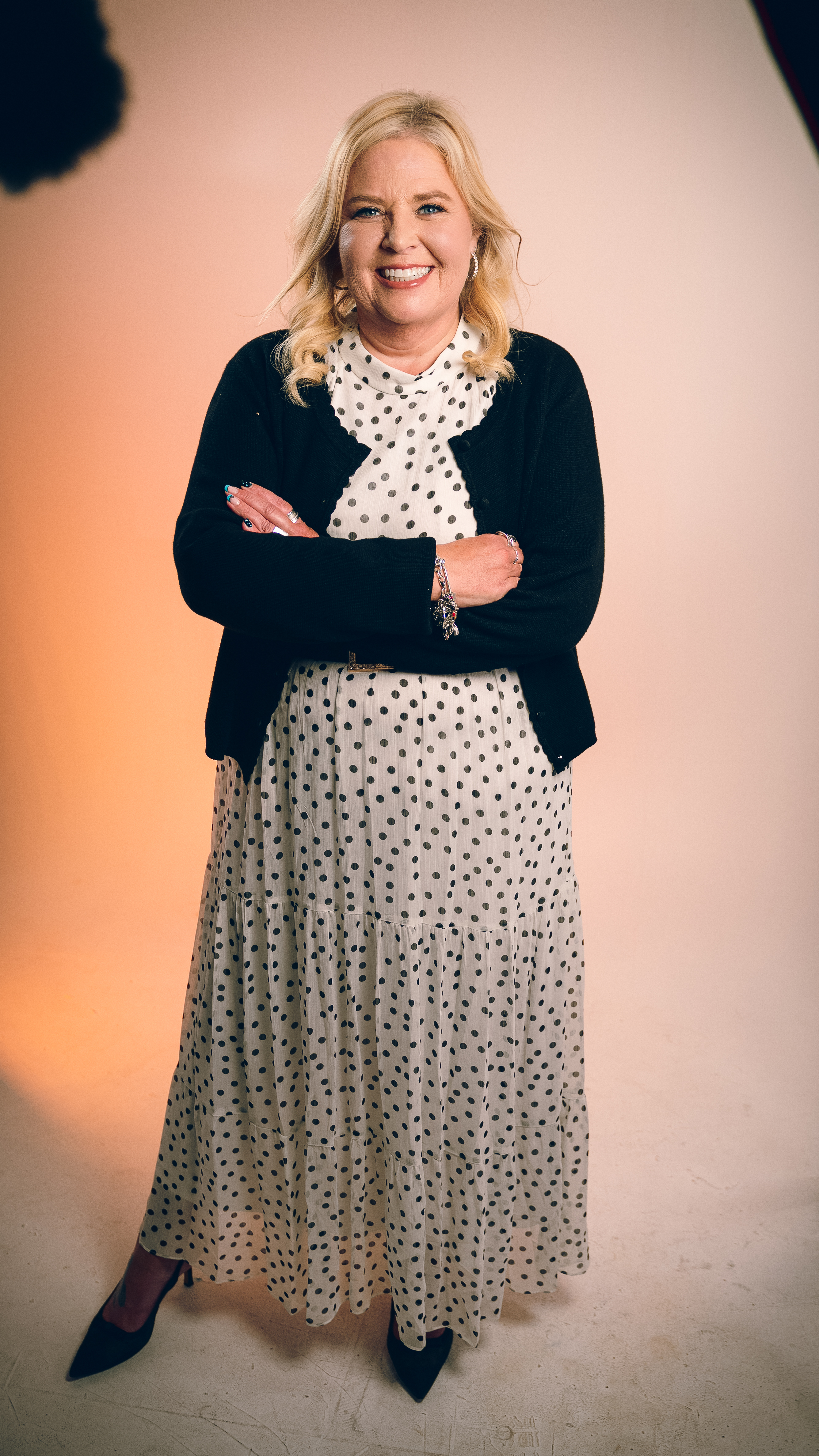
Dr. Heather Fahnestock Is Rethinking What It Means to Learn
Through Waterview Learning Academy and the Anatis Paradigm, the educator and innovator is challenging conventional assumptions about learning, neurodiversity, and the environments in which students thrive.
The question beneath the lesson
A student who struggles to sit still, engage with a task, or demonstrate understanding in a conventional way can quickly become the focus of a school’s concern. But before a difficulty becomes a definition of the child, another question deserves attention: what role might the learning environment be playing? For Dr. Heather Fahnestock, founder of Waterview Learning Academy and developer of the Anatis Paradigm, that question has shaped more than two decades of work in education.
Fahnestock describes her approach as a challenge to what she calls the “assembly-line” model of schooling—an approach organised around uniform expectations and the assumption that students should learn and demonstrate knowledge in similar ways. Her alternative begins with the learner: the individual’s needs, interests, sensory environment, and sense of purpose. It is a philosophy that asks educators to examine not only what is being taught, but also the conditions in which learning is expected to happen.
The origin of Anatis
Fahnestock says her journey began 24 years ago with a growing concern that rigid classroom structures could place compliance ahead of curiosity. Fourteen years ago, students in one of her early cohorts began calling her “Mama Duck” during outdoor learning adventures. She embraced the image as a symbol of active exploration, and it became part of the story behind the Anatis Paradigm; “anatis” is Latin for duck.
The name captures a central idea in her philosophy: learning should not be limited to passively receiving information. Students should have opportunities to explore, make decisions, create, and connect concepts to meaningful tasks. For Fahnestock, the work is not simply about making lessons more entertaining. It is about asking how purpose and participation can help students engage with ideas in ways that make sense to them.
Waterview: a place to begin again
To put these ideas into practice, Fahnestock established Waterview Learning Academy as a physical learning environment in which the approach could develop. She says the name was chosen for its symbolism: water represents cleansing and renewal, and the school was intended to give students a fresh start beyond earlier academic struggles or labels.
According to Fahnestock, Waterview grew largely through word of mouth, eventually reaching the student-to-teacher ratio its team considered appropriate. During the COVID-19 period, she says the school expanded into additional spaces to continue in-person learning within applicable state guidelines. The experience helped clarify a strategic distinction: the physical school was one setting, but the educational framework she had been developing might be adapted elsewhere.
When concepts meet real life
Fahnestock describes practical projects designed to connect classroom concepts with real decisions. Students might develop a pitch for a fish-tank design while applying three-dimensional geometry, redesign a cereal box to explore surface area and volume, or use dry ice experiments to investigate physics. In each case, the subject matter is linked to a task with a visible purpose.
These examples offer a concrete view of the philosophy, but they should not be mistaken for proof that one method works identically for every learner. Their value lies in the question they raise: can students find an idea easier to grasp when they are asked to use it, explain it, or create something with it? Projects can also offer different routes for showing understanding, from a presentation or design to a written response.
Rethinking behaviour and environment
A further part of Fahnestock’s approach is the possibility that some behaviours interpreted as defiance or disengagement may reflect a mismatch between a student and the environment. She encourages educators to reconsider responses such as rocking, pacing, or difficulty remaining still, and to examine whether sensory needs, task design, or classroom expectations may be contributing factors.
That perspective is best treated as an invitation to investigate rather than a universal explanation. Behaviour can have many causes, and each learner’s circumstances are different. Understanding a student calls for careful observation, collaboration with families and relevant professionals, and attention to both support and accountability. Dignity and high expectations need not be competing goals.
From one building to a wider framework
Fahnestock is now looking to share the Anatis Paradigm beyond a single physical school. She describes developing materials about the approach’s relationship to learning science, curiosity, sensory accommodations, and purpose, and advising educational leaders and homeschooling networks on ways students can demonstrate understanding through formats such as video, art, and writing.
Taking a framework into new settings raises practical questions. How should it be introduced and adapted? What training and resources would help educators use it thoughtfully? And what evidence should be gathered to evaluate its effects across different learners and environments? Those questions will matter if the model is to be applied beyond the setting in which it developed.
The legacy of a fresh start
Fahnestock shares accounts of former students who, in her experience, have gone on to college, military service, and other opportunities. These are personal accounts from her professional journey; broader conclusions about outcomes would require independently documented evidence and careful evaluation. Their place in her story, however, points to the ambition that underlies her work: that a learner’s past difficulties should not dictate what becomes possible next.
Her long-term vision is for classrooms, alternative learning centres, and homes to become more responsive to individual learners. The future reach of the Anatis Paradigm will depend on how clearly it can be explained, adapted, and evaluated. But the question at its centre extends beyond one school or one framework: when learning becomes difficult, do we examine only the student—or do we also examine the conditions in which learning is being asked to happen?
The byline
People connected to this story